Vasu Chaudhry

Design Strategist

GharSe

PRODUCT DESIGN

GharSe is a mobile-first kitchen platform for India's home cooks running real food businesses from home, without middlemen or restaurant-grade tools. The challenge wasn't beauty, it was usability under the pressure of active orders.

ROLE

UX/UI

Designer

COLLABORATORS

None

DURATION

3 Months

TOOLS

Figma

GharSe

Product Design

WEBSITE DESIGN & CONSUMER

PSYCHOLOGY

GharSe is a mobile-first kitchen platform for India's home cooks running real food businesses from home, without

middlemen or restaurant-grade tools. The challenge wasn't beauty, it was usability under the pressure of active orders.

ROLE

UX/UI Designer

COLLABORATORS

None

DURATION

3 Months

TOOLS

Figma

What didn't make it

Two directions were live options before this one, worth naming because of why they died, not just that they did.
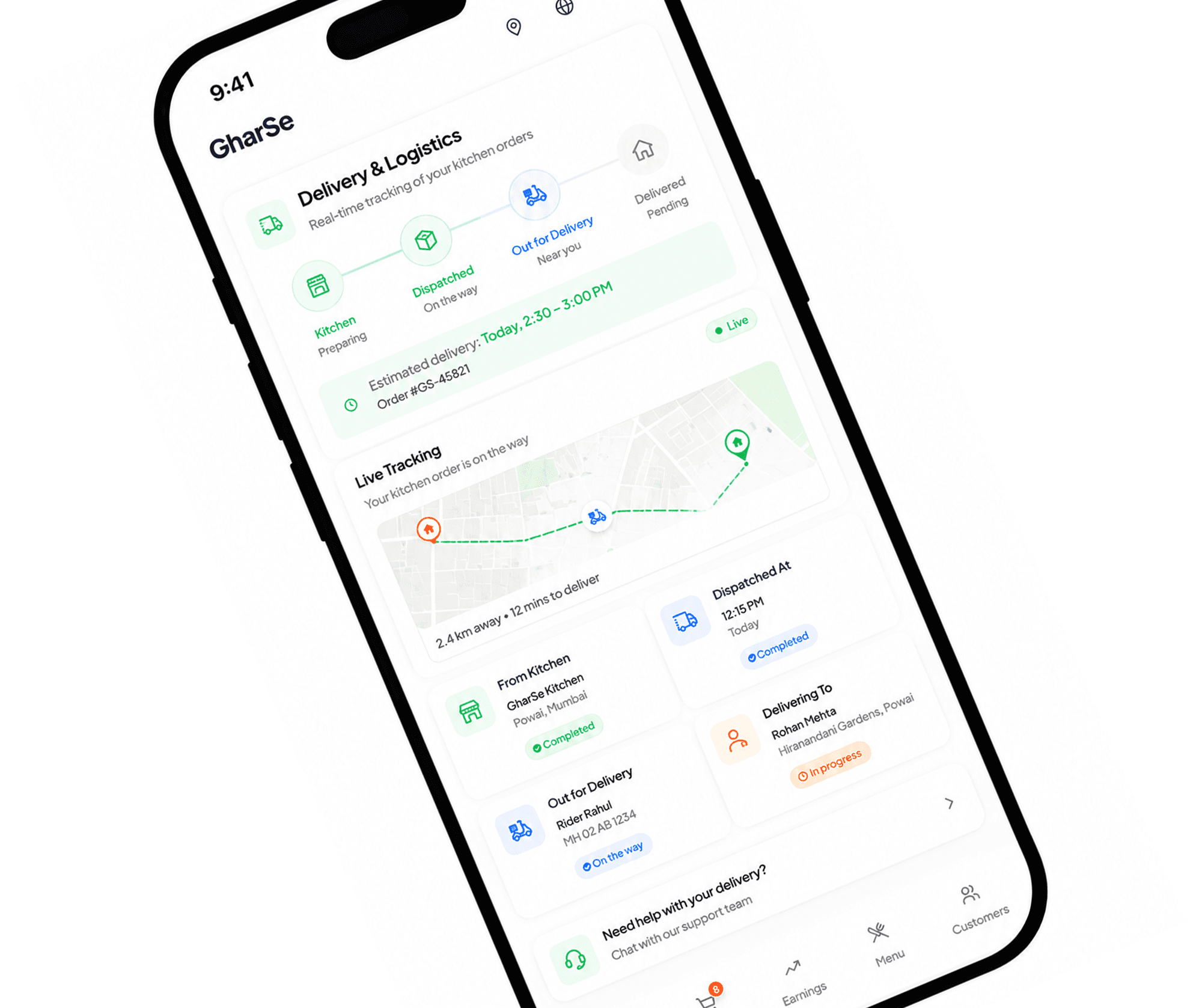
Clinical-white, science-forward layout

REJECTED

BUILT IN DELIVERY LOGISTICS

Most cooks already had a working, if informal, delivery relationship; not a broken problem worth solving.

Aggressively natural, all-green identity

REJECTED

VOICE BASED ORDER ENTRY

Kitchens are loud and hands are wet mid-service; voice added friction it was meant to remove.

Designing for a first time digital user, not a power user

The dashboard had to do the work of an entire operations team in a single screen. Order status in three colour-coded states, an earnings summary comparing this week to last, five-tab navigation covering every operational need without burying anything more than one tap deep.

From Whatsapp threads to one view

The orders screen consolidates what home cooks were previously managing across WhatsApp, phone calls, and handwritten notes. The ingredient aggregator pulls quantities needed from the day's orders automatically, so a cook knows they need 8kg of onions before they start cooking, not halfway through. The order volume map turns six months of orders into one visual that tells the cook when to expect their next peak.

A financial dashboard for someone who's never used one

The financial summary leads with the four numbers that matter most, revenue, costs, orders, pending, at the week level. The profit/cost breakdown shows the margin in green because that's the number a cook needs to feel good about continuing. Every piece of information exists to help the cook decide whether to take on more orders tomorrow.

Menu, customers, stock | same logic throughout

The menu screen surfaces low stock alerts and dish performance with the logic explained inline, not just a flag but a reason. The customers screen gives home cooks something aggregator platforms never did: visibility into who their customers actually are, CRM functionality designed for someone who's never used a CRM. The stock levels screen closes the loop between orders and ingredients, with predictive demand factoring into every label so the system tells the cook what they'll need, not just what they have.

Testing under real pressure

The app was tested with four home cooks and eight customers in Mumbai across multiple prototype iterations. Cooks used the prototype during actual service windows, so feedback was grounded in real pressure, not simulated scenarios. What broke under testing wasn't the visual design, it was information hierarchy, what needed to be one tap away versus two.

Reduction in usual coordination time

Increase in repeat orders

of users trusted the design system

Food wastage reduced by

GharSe solved for legibility under pressure, a cook reading their entire day in one glance instead of three apps and a notebook. What it doesn't yet solve is trust calibration. Every stock label and demand prediction is shown with equal visual confidence right now, whether it's backed by six months of order history or six days of guesswork. A cook new to the platform has no way to tell the difference.


If I revisited this, that's the next problem worth chasing, surfacing confidence alongside conclusions, not just the label itself. A "Low Stock" flag backed by real data should look and feel different from one that's an early estimate. That's the gap between a tool a cook uses and one a cook actually trusts.

Vasu Chaudhry

Work

About

Thinking

Instagram

LinkedIn

Medium

Create a free website with Framer, the website builder loved by startups, designers and agencies.